
Property · 01
Published protocol registry
Citizens, regulators, journalists, and adversaries read what is measured for, and how. Every protocol versioned and contestable.
The Consensus Mesh ·
If an interaction can reach a person, it had to cross a network, and that network is where protection lives. The Consensus Mesh is the architecture under every PKnet deployment: a zero-trust, self-proving federation that measures inline at the same hop the threat already used, holds one custody contract behind every record, and develops herd immunity the moment a single node learns.
Lineage paper · Cheraitia · Self-Supervised Meta-Heuristic Mapping · 2024
DOI 10.13140/RG.2.2.30201.48486
Architecture
How we deploy
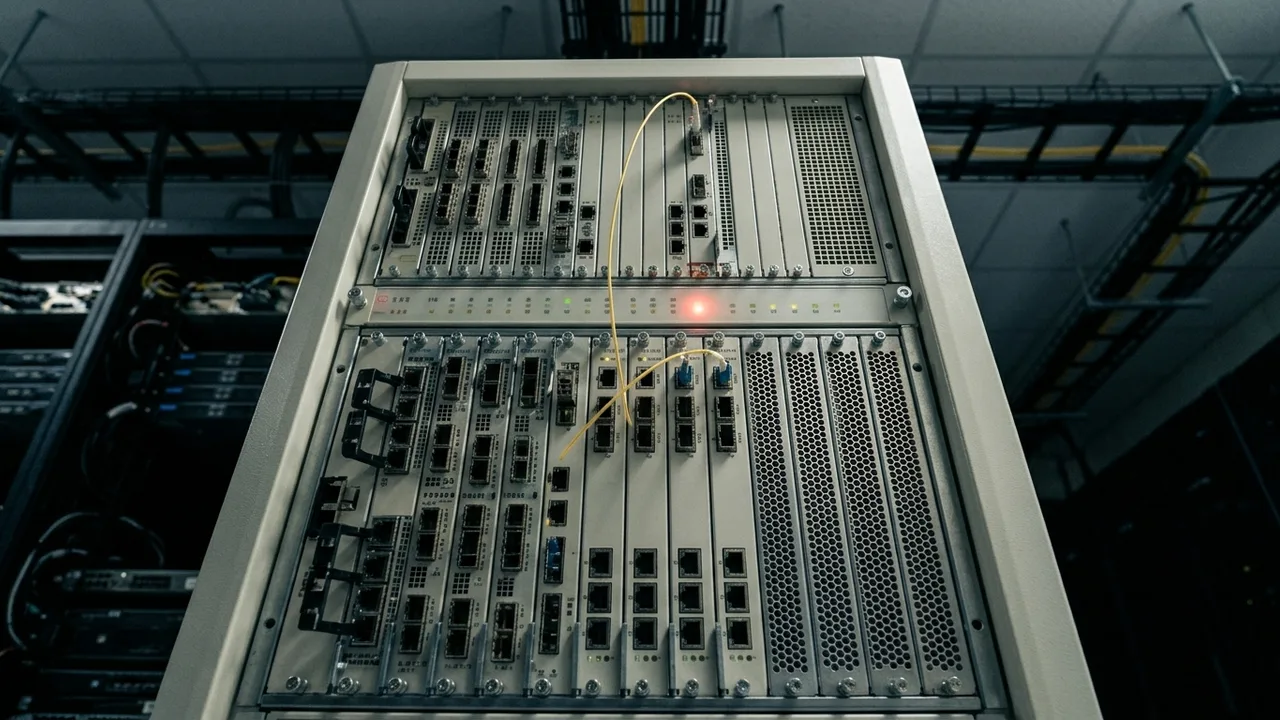
PKnet deploys as a single sealed node placed inline at a point interactions already cross, at a carrier’s signalling layer, an institution’s call or transaction rail, a civic safeguarding line. One node protects everyone whose interaction crosses it, without install, enrolment, or any extra step from the citizen.
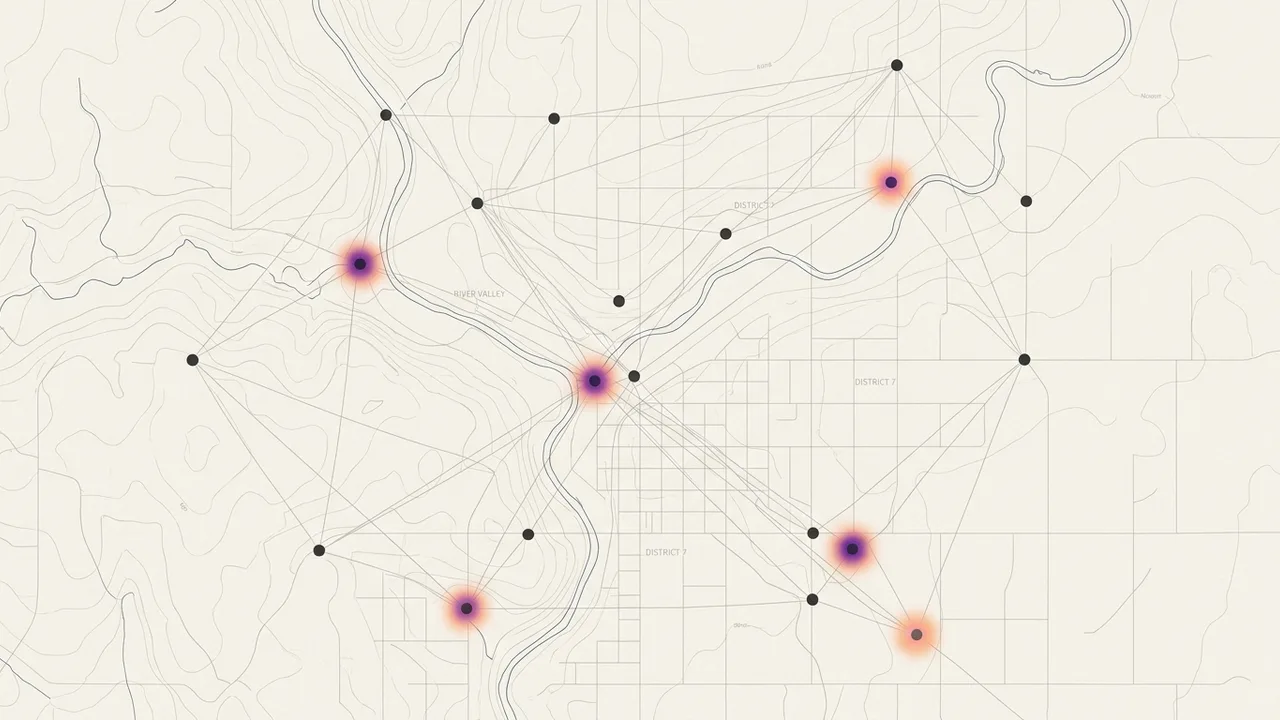
Coverage scales by network reach, not by sign-up. As nodes federate across operators and borders, an interaction is protected the moment any node on its path is live. There is no centre to saturate and no per-person onboarding to throttle growth.
The immune system
People become part of the immune system the way a body does, not by opting into immunity but by being on a protected path. Nothing to download, nothing to switch on.
And protection is reciprocal. When an interaction at any node surfaces a new threat structure, that structure becomes an antibody, a signed protocol update on the shared registry, that immunises every other node. Each protected interaction makes the whole population harder to attack.
Mechanism
A zero-trust, self-proving federation. No app on the citizen's phone, no new surveillance scope on the operator's side, and no node, not even the host, trusted on faith. Four properties hold it together, and turn population protection into a herd-immune system rather than a dragnet.
Principle · 01
Every scam, coercion, or grooming attempt had to reach the person, and reaching means it crossed a network already carrying it. The instrument sits inline at that same hop. The citizen installs nothing, moves nothing, does nothing.
Principle · 02
SGM runs inside a sealed confidential-computing enclave. The operator hosts the measurement but cannot see inside it, and the enclave proves, cryptographically, on every run, that it is executing the exact instrument published in the registry, unmodified. You cannot look in; the network can prove what runs.
Principle · 03
Contributions are secret-shared across custodians under secure aggregation, each carrying calibrated noise. What surfaces is a differentially-private population sum with a published privacy budget. Non-attribution stops being a clause in a contract and becomes a bound you can audit.
Principle · 04
When one node resolves a new threat structure, the protocol update is signed and published to an append-only transparency log the whole federation reads. One node learns; every node verifiably adopts. A digital immune system for civic and democratic protection, with no central brain and no node trusted on faith.
Legibility
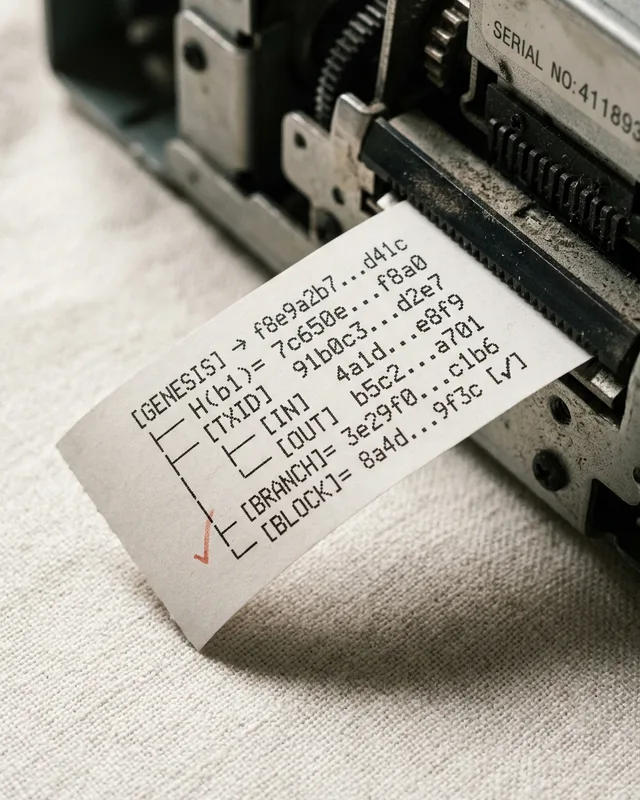
The institution can prove what its instrument runs. The citizen should not have to take that on faith. So every protection event mints a receipt: one only you can open, and one anyone can verify against the same public log the operators use.
It works the way a safety number works in an encrypted messenger, or an entry on a public ledger: a glyph you can compare, a proof anyone can check. You see your own glyph in the mesh. You are a participant in it, with visibility into it, not a subject of it.
How your receipt reaches you
Inside the sealed enclave, the line is turned into a glyph that cannot be reversed. The number is discarded on the spot. Identity never leaves the edge.
Append-only, indexed by your glyph, mirrored across the federation. It carries the reading and the proof. The content, identity and keys stay sealed.
A code to your number, or national eID where you choose it, re-derives the same glyph on your device. Anyone can verify the proof exists. Only you can open what is inside.
Open by design
The spec, the verifier, the client, the transparency log and a reference gateway are open-source. Nothing about how a finding is produced is hidden.
SGM ships as a frozen, signed artifact. Its measurement hash is exactly what the network proves is running, so the instrument can be checked without being exposed.
Keys stay with the citizen; the ledger is mirrored. Recovery is opt-in and pluggable by region: a civic trustee the citizen elects, not a private platform and not by default.
Transparency
Public append-only log · mirrored
Every receipt lands on one log: readings, protocols and proofs, mirrored across the federation. The content, identity and keys stay sealed. Anyone can read the whole ledger; only you can open what sits behind your own glyph.
Fidelity
Consensus Mesh · Fidelity contract
Every gateway in the Consensus Mesh runs the same published contract. The architecture defines what is measured. A single fidelity reading, how much of the interaction’s structure the deployment captured, is the only value that leaves the edge.
That reading goes to the custodian. The interaction, the identity, the content, none of it does. SGM is the instrument that produces the reading. The architecture is what enforces the contract.
Consensus
Each edge contributes a locally randomised signal, its own structural reading, perturbed at the source, and the centre composes those readings into prevalence and drift.
The aggregator’s domain is precisely that: prevalence and drift. The architecture leaves per-person, per-group, and per-region decomposition structurally outside it.
Trust
Property · 01
Citizens, regulators, journalists, and adversaries read what is measured for, and how. Every protocol versioned and contestable.
Property · 02
Any citizen can request and contest the full derivation of any finding about them, reproducible to the byte.

Property · 03
Records of measurement live with an independent civic body under a published deployment contract.

Property · 04
Standing to suspend any deployment that fails its annual attribution-resistance audit.
Deployment
Operators · telco · bank · platform
SGM slots inside the operator’s existing scope; the deterministic, glass-box instrument supplies legibility per case; records leave the operator to the civic custodian.
States · regulators · coalitions
The mesh is deployed natively across consenting ingest points. The reading captures the interaction’s spectral shape; reversed-aggregation consensus carries population insight upward.
References & next
If you carry responsibility for a national protective programme, a sector-wide intelligence-sharing coalition, or a regulated industry’s vulnerable-customer mandate, the Consensus Mesh is the conversation.